
/en/ technologies / react-native
RN · React Native
// Mobile technology · iOS + Android

From idea to app in the store
faster than you think.

React Native lets you ship a working product to iOS and Android in the time your competitors take to hire a second team. We help startups and product companies build what gets used — not what looks good on slides.

3 weeks to first MVP
11M+ apps built on React Native
iOS + Android one codebase, two platforms
Meta
Instagram
Facebook
Discord
Shopify
Pinterest
Tesla
Airbnb
Coinbase
Wix
Uber Eats
SoundCloud
If React Native is enough for Instagram with hundreds of millions of users, it’s probably enough for your app too.
// Why React Native

Six reasons it’s the safest choice today.

Business reasons first. Technical details below, if you want to look under the hood.

01
−35% cost
One budget instead of two
A native iOS and Android app is two separate projects: two teams, two codebases, two rounds of testing. React Native is one project that ships to both platforms. In practice, that means 30–40% cost savings versus parallel native development.
02
MVP in 3 weeks
Faster to users
First product versions hit testing and the stores in weeks, not quarters. You can react to market feedback before the competition finishes planning.
03
1 team
Easier maintenance
Bug fixes, feature changes, new releases — one team, one pass. No more juggling schedules between iOS and Android.
04
reuse with web
Code sharing with web
If you already have (or plan) a React web app, a substantial part of the code, logic, and components carries over to mobile. Real savings of time and money — not a marketing slogan. One product, one knowledge base, a consistent experience across all platforms.
05
OTA · minutes
Updates without waiting on the store
Traditional app: you submit a new version, wait a week for App Store review, and pray it doesn’t get rejected. React Native: the fix is in users’ hands in minutes. Found a critical bug at 2:00 PM? It’s fixed for everyone by 2:15. That’s one of React Native’s biggest business advantages.
06
Meta · 2015→
Low technology risk
React Native isn’t an experiment — it’s backed by Meta (Facebook & Instagram), used by half the market, with a mature ecosystem and a community that won’t disappear overnight.
// Honestly

When React Native fits — and when it doesn’t.

We don’t sell every technology for every problem. If React Native doesn’t fit your project, we’ll say so — and propose an alternative.

React Native is a good choice for:
  • company apps and internal tools (for employees, partners, branches)
  • first product versions (MVP), when the idea is still searching for its shape
  • products growing in parallel with a website or web app
  • consumer apps with a large user base and frequent releases
  • products with many roles, flows, and admin panels
  • projects where iteration speed matters more than building native from scratch
Let’s build your idea!
We advise against React Native if:
  • Your product is mainly advanced 3D graphics, AR/VR, or real-time rendering. Games, video editors with effects, Snapchat-style AR-filter apps — these are areas where Unity, Unreal, or native with dedicated engines is worth considering.
  • You need a desktop app, not a mobile one. React Native has desktop ports (React Native for Windows, macOS), but it’s still an area where we recommend deliberately weighing alternatives — including Electron or native.
In those cases we’ll point you to an alternative approach — and help you find the right people.
// Industries & examples

What we actually build, by industry.

A few app types per industry — not an exhaustive list, just a starting point for a conversation. If your industry isn’t here, chances are we’ve done something close in our portfolio.

Fitness & wellness

3 examples
Fitness app for 24/7 gyms

QR-code club entry instead of a reception desk, personal-training bookings, and member progress tracking.

Online personal trainer

Training plans, set and rep logging, video exercise demos, and direct communication between trainee and trainer.

Sports club app

Group class schedules, room and equipment bookings, membership-card payments, and notifications about new classes.

Is this your industry? Let’s talk →

Logistics & delivery

3 examples
Courier app

Shift job lists, navigation, photo + signature delivery confirmation, and dispatcher communication that works offline.

Restaurant delivery

Multi-channel order intake, courier route optimization, and live customer ETA notifications.

Fleet tracking

Real-time vehicle map, job dispatch, and route/mileage reporting for drivers.

Is this your industry? Let’s talk →

Fintech & payments

3 examples
Mobile banking

Fingerprint or face login, filterable transaction history, instant transfers, and notifications on every account event.

Investment portfolio

Live portfolio valuation, price alerts, broker integration, and full buy/sell history.

Small-business accounting app

Invoice issuing, camera receipt scanning, income/cost overview, and overdue-payment reminders.

Is this your industry? Let’s talk →

Education & e-learning

3 examples
Language-learning app

Short lessons, microphone-based pronunciation scoring, progress tracking, and spaced-repetition review.

Video course platform

Online lesson playback, offline download for watching on the go, quizzes, and completion certificates.

School or university app

Class timetables, grades, parent–teacher messaging, and notifications for absences and school events.

Is this your industry? Let’s talk →

Manufacturing & heavy industry

3 examples
Production-line operator app

Output and downtime reporting on a tablet at the machine, shift-plan visibility, and fault reporting to the foreman.

Quality control for foundries and metalworks

Batch scanning of metallurgical products, photographic defect documentation, and on-the-floor signoff of certificates and inspection cards.

App for foremen and maintenance

Shift management, service schedules, shop-floor incident reports, and EHS checklists filled in the field.

Is this your industry? Let’s talk →

Health & telemedicine

3 examples
Telemedicine app for patients

Video consultations with doctors, e-prescriptions, visit history, and medication reminders.

Psychotherapist–patient app

Online session booking, between-session mood journal, homework assignments, and secure therapist communication.

Wellness & mental-health app

Voice-guided meditations, breathing exercises, sleep and habit tracking, and short stress-reduction programs.

Is this your industry? Let’s talk →

Hospitality & travel

3 examples
Hotel guest app

Mobile check-in without a queue at reception, room key on the phone, room-service ordering, and a chat concierge.

Tableside restaurant ordering

QR-code menus, ordering without a waiter, in-app payment, and a loyalty program for regulars.

Tour-guide app

Offline-capable tour routes, headphone audio guides, and ticket and attraction booking in one place.

Is this your industry? Let’s talk →

Construction & real estate

3 examples
Site-manager app

On-site work log, photographic progress documentation, material usage reporting, and handover checklists.

Real-estate agent app

Listings database with map, fast in-person property presentation, in-app contract signing, and showings management.

App for contractors and tradespeople

Job list from clients, quotes from ready templates, daily schedule, and on-the-phone invoicing.

Is this your industry? Let’s talk →

Other

and more

If your industry isn’t here, chances are we’ve done something close in our portfolio. We’ve worked on automotive apps, on apps for the breakdance scene and amateur sports, on dating, cashback and loyalty apps, in the supplements industry — and in a few stranger areas that don’t fit neatly into one tile. Tell us what you’re building — we’ll be honest about whether we know your case and how to approach it.

Describe your idea
// Selected work

A few of the projects behind us.

These are just a handful of projects we can publicly share online. The full portfolio — including projects under NDA — we discuss in conversation.

All case studies →
// case study 01 GovTech / Mobile

PZŁ 2.0

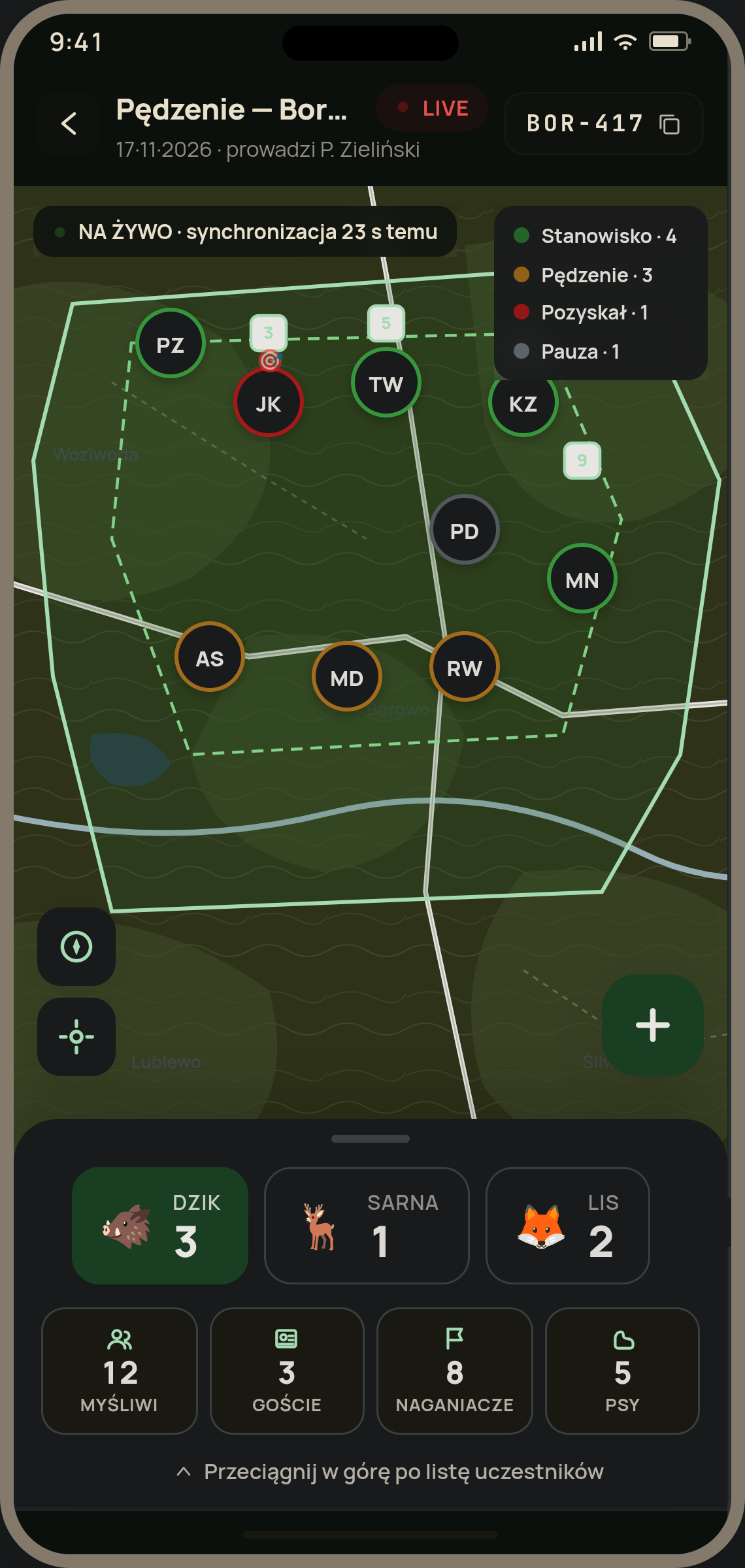
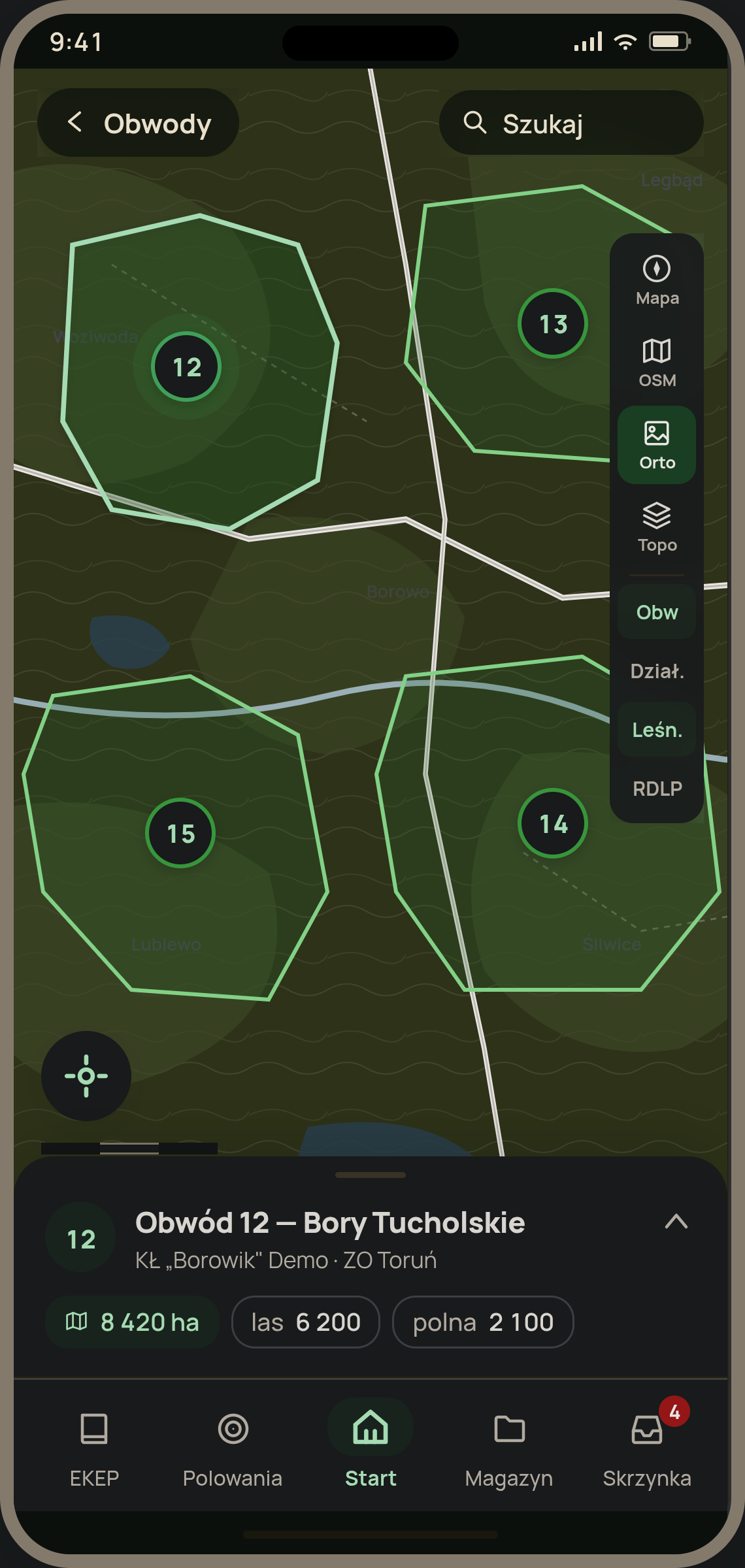
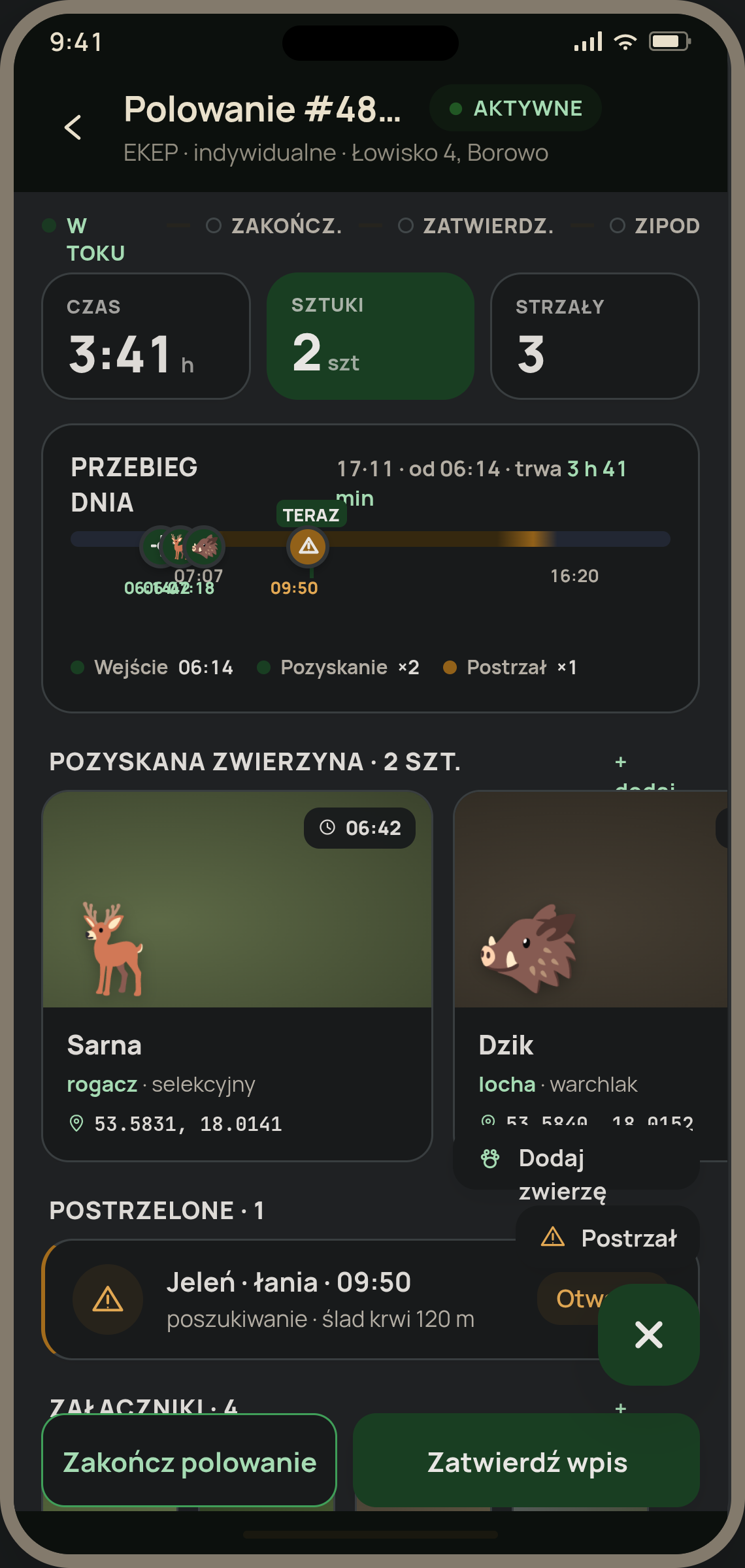
React Native mobile app for the Polish Hunting Association — 130,000 members, 20+ functional modules.

  • 130k PZŁ members
  • 20+ modules
  • 21 roles / permissions
Details
3
weeks to the first working version.
After 3 weeks you have a working version in hand. From there, a demo and a new batch of features every two weeks — up to a full MVP in 3–12 weeks.
MVP · step 06
01 / 09
Workshop
We spend a day at your company — meeting the team, mapping processes, gathering context. We come back for follow-up visits whenever we need to see something up close.
Day 1
02 / 09
Wireframe
One day after the workshop you have a clickable mockup in hand. The first moment you see how the product can look and behave — and what is missing.
Day 2
03 / 09
UI/UX iteration
We refine visuals and interactions based on your feedback. Every change comes back to you within a day.
Day 3 – 4
04 / 09
Team prototype
A full clickable prototype that goes into your team's and clients' hands. We catch the last gaps before any code is written.
Day 5 – 7
05 / 09
Architecture
System diagram, stack choice, schedule, budget. Foundations for the production build, signed off together.
Week 2
07 / 09
Deployment
Integrations with your tools, data migration, training, documentation. We go live together.
1 week
08 / 09
Maintenance
Hot-fixes, iterations, new modules. We stay with you after launch.
Open-ended
09 / 09
Network
We open up our ecosystem to you: lawyers, marketing, founders of other projects. You become part of a network of "emerging unicorns" — we help you find each other.
After we start working together
Dawid Michota — Fullstack Developer
role: Fullstack Developer · CEO · Architect
experience: 4.5+ years
projects: ~15 in React Native
stack: TypeScript · React · React Native · NestJS · Node.js · PostgreSQL

Specializes in TypeScript, React, and React Native — from front-end architecture to backend integration in Node.js (NestJS, Express).

One of the main, official maintainers of the open-source library ReactGrid — a spreadsheet for React with over 1,400 GitHub stars and ~60K monthly NPM downloads.

Dawid Michota
Fullstack Developer

Over 4.5 years of experience building web and mobile apps. Took part in roughly 15 React Native projects, including as development lead.

// Selected projects
  • Polish Hunting Association 130k members
    Led development of the organization’s official mobile app as Mobile Development Leader. Covers the full scope of the PZŁ 2.0 system — 20+ modules and 21 permission roles — and reaches 130,000 members. Delivered in 6 months. See the full case study →
  • SFD mobile › web
    Previously part of the team behind the mobile app for one of the most recognizable Polish supplement and nutrition brands. Worked with UI/UX designers on quality and performance. Mobile conversions quickly surpassed the web version.
  • Gymsy
    Contributed to the mobile app build.
  • ViDating App
    A dating app combining elements of Tinder and TikTok. Co-built the start-up on the technical and product side.
  • Paymi $10B+ customer spend
    Cashback e-commerce mobile app used in Canada and the USA. Before its acquisition Paymi had over 350,000 linked credit and debit cards and processed over $80 million in transactions. The platform recorded over $10 billion in customer spend.
You can talk directly to the person who will write your app. Not a salesperson who disappears after the contract is signed.

Mobile: React Native + TypeScript + Expo

We use proven libraries from the React Native ecosystem, picked to fit the specific project — including Unistyles, React Navigation, Reanimated, Tanstack Query, and others.

Expo is today’s standard for React Native: a coherent, maintained set of modules (Expo SDK) with predictable updates, instead of hand-stitching dozens of packages on incompatible versions. We drop into native code (Swift / Kotlin) only where it’s genuinely needed.

EAS Build gives us repeatable cloud builds, and EAS Update lets us ship a JS fix without App Store and Google Play review. Result: shorter commit → user cycle, faster feedback loop, higher release quality.

Backend, infrastructure, DevOps, and the rest of the technologies we work with are documented in detail here.

// Why it matters
One coherent ecosystem from the database all the way to the screen on your user’s phone. One company, one team, one contract, one point of contact. Less coordination, fewer "not our fault" exchanges, faster decisions.
// Under the hood Technical details — stack, architecture, tooling
TypeScript by default
All code is typed — fewer production bugs, easier onboarding for new people.
New architecture (Fabric + TurboModules)
Real native performance, not a five-year-old compromise.
Native bridge when needed
Where React Native isn’t enough, we write modules in Swift / Kotlin. No fighting the framework.
Expo — a full platform for React Native apps
We work on Expo and its ecosystem, which gives concrete advantages:
  • EAS Build — cloud iOS builds without needing a Mac on the team.
  • Expo Updates — instant app updates (OTA) without going through App Store or Google Play review.
  • Expo Modules — easy authoring of custom native modules when a project calls for it.
  • Rich SDK — proven, ready-made modules for camera, notifications, biometrics, maps, files, audio, location. We don’t reinvent the wheel.
  • Active development — Expo is the de facto standard for React Native today, used by most serious teams worldwide.
Mature library ecosystem
We use proven tools picked to project needs — React Navigation, Reanimated, Tanstack Query, Tanstack Form, Tanstack Table, Expo, Zod, Paraglide.js, Ky, FlashList, type-fest, and more.
Observability — Sentry
Production crash reporting mapped back to original source (source maps uploaded during the EAS build). We see real user errors instead of guessing from reports.
  • Currently — Sentry for crashes — full stack trace, release tagging, build-versioned releases.
  • Deliberately skipped (for now) — Performance monitoring and release health — added when the project needs them, not by default.
CI/CD and release strategy
A build isn’t the end — what matters is how code reaches users safely.
  • GitHub Actions — lint, typecheck, and tests on every PR — nothing lands in main without a green gate.
  • EAS Submit — automated upload to App Store and Google Play, no manual binary handling.
  • OTA channels (preview / production) — Expo Updates with separated channels — preview for testers, production for users. Promotion is deliberate, not automatic.
  • Staged rollout — a new version goes to a slice of users first. If crash-free rate drops, we halt the rollout before it reaches everyone.
See how this looks in a real project — PZŁ 2.0 case study →
? Is React Native fast?
Yes — very. Unlike hybrid or WebView solutions, React Native renders real native components directly through iOS and Android. The new architecture (Fabric, TurboModules) eliminates bottlenecks from years past. That’s why React Native powers Discord at hundreds of millions of active users, Instagram, Shopify, and Tesla. Your app will run smoothly and quickly — no compromises.
? Will a React Native app ship to App Store and Google Play normally?
Yes. From the stores’ point of view, a React Native app is a regular native app. It goes through the same review process as any other.
? What if React Native stops being enough and I want to move to native?
Companies like Tesla use React Native — it’s unlikely to stop meeting your needs. That said, React Native lets you gradually replace individual screens with native (Swift / Kotlin), without rewriting the whole thing. In practice, most companies don’t do this because they don’t need to. But the option is always on the table.
? How long does it take to build an app?
We can deliver an MVP in 3 weeks. A full product — typically 4 to 12 weeks, depending on scope. You get an exact timeline after a short discovery phase, once we know the specific scope.
? Do I get the source code?
Yes. The code is yours from the first commit. We work in your repository — you have ongoing access.
? Do you only do mobile?
No. We also do web (React), backend (Node.js, NestJS, Express), and DevOps and infrastructure. Often the whole product — front, mobile, API, and deployment — is built with us. That simplifies coordination significantly. You can find the full list of technologies and areas we work in here.
? How much does it cost?
It depends on the scope. After a short conversation and reviewing the project, we give a range. We don’t work in a "quote without a brief" model — that’s unfair to both sides.
// Comparison

React Native vs…

The three most common questions in a first meeting. Short and to the point.

vs

Flutter

React Native wins

Flutter looks attractive on paper, but in practice React Native has a few concrete advantages that translate into real money and lower project risk:

  • Language. Flutter uses Dart — a niche language almost no one knows outside Flutter. React Native uses JavaScript/TypeScript — a language millions of developers around the world know. Hiring, team turnover, project continuity — all simpler and cheaper.
  • Community and ecosystem. React Native has a community several times larger, more ready-made libraries, more solved problems on Stack Overflow and GitHub. Whatever happens in your project, someone’s already solved it.
  • Code sharing with web. React Native uses the same concepts as React. If you have or plan a web app, a substantial part of your code and logic carries over. Flutter doesn’t give you that — a website is a separate project from scratch.
  • Platform-native look. Flutter renders everything with its own engine, so apps often look identical on iOS and Android, ignoring both systems’ conventions. Users feel it. React Native uses real native components — an iOS app looks like iOS, an Android one looks like Android.
  • Risk from Google. Google has a long history of abandoning its own technologies (Angular Dart, Stadia, dozens of products in the Google graveyard). Meta has built React Native into its flagship products, which aren’t going anywhere.
  • App size. Flutter apps are noticeably heavier — Flutter bundles its own rendering engine into every app.
For most business projects, React Native is simply the safer, more future-proof choice.
vs

Native (Swift + Kotlin)

95% of projects: React Native

Native (Swift for iOS, Kotlin for Android) means, in practice: two teams, two codebases, twice the implementation time, twice the budget, and twice as many opportunities for the apps to drift apart in functionality between platforms.

React Native gives you the same end-user experience — real native components, native performance, access to system features — at a fraction of the cost and time. One team, one codebase, one product consistent across iOS and Android.

In practice: for 95% of business projects, React Native is simply the better call. Less money, less risk, faster to market, easier to maintain.
vs

PWA

React Native for app stores

A PWA is a website pretending to be an app. It runs in the browser, has limited access to device features, handles notifications worse, and isn’t in the stores. React Native is a true native app. If you care about presence in App Store and Google Play — PWA is out. If, on the other hand, a PWA is a deliberate choice for your project — we do those too.

// Final step

Got an app idea? Let’s talk.

No sales pitch, no "cloud of solutions." Tell us what you want to build — we’ll tell you whether React Native is the right pick, how long it’ll take, and what it’ll cost.

Ready when you are

Tell us what you need.

Have an idea for an app or need tech support? Write to us — we'll prepare an initial analysis and estimate within 48h.

Write to us
Office
philosopht Dawid Michota
ul. Świętokrzyska 41A
26-001 Wola Kopcowa, Poland
NIP 6573002241
Free consultation
Table of contents
  1. 01 Who uses
  2. 02 Why
  3. 03 When
  4. 04 Industries
  5. 05 Case studies
  6. 06 About
  7. 07 Stack
  8. 08 FAQ
  9. 09 Comparison
  10. Contact